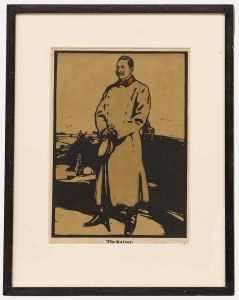
Sir William Nicholson (1872-1949) was a British painter and printmaker. Born in Newark-on-Trent, he was the youngest son of industrialist and Conservative MP William Newzam Nicholson and his wife Annie Elizabeth Prior of Woodstock, Oxfordshire. At sixteen, he enrolled at Hubert von Herkomer's art school in Bushey, where he met Mabel Pryde, later his wife. Through her, he met her brother, artist James Pryde. After leaving Herkomer's in 1891 following an incident Herkomer called “a piece of Whistlerian impudence” (Nicholson posed a nude model with an open umbrella), he briefly studied at the Académie Julian in Paris. Nicholson and Mabel eloped in 1893 and settled in Denham, Buckinghamshire, where they were joined by Pryde.
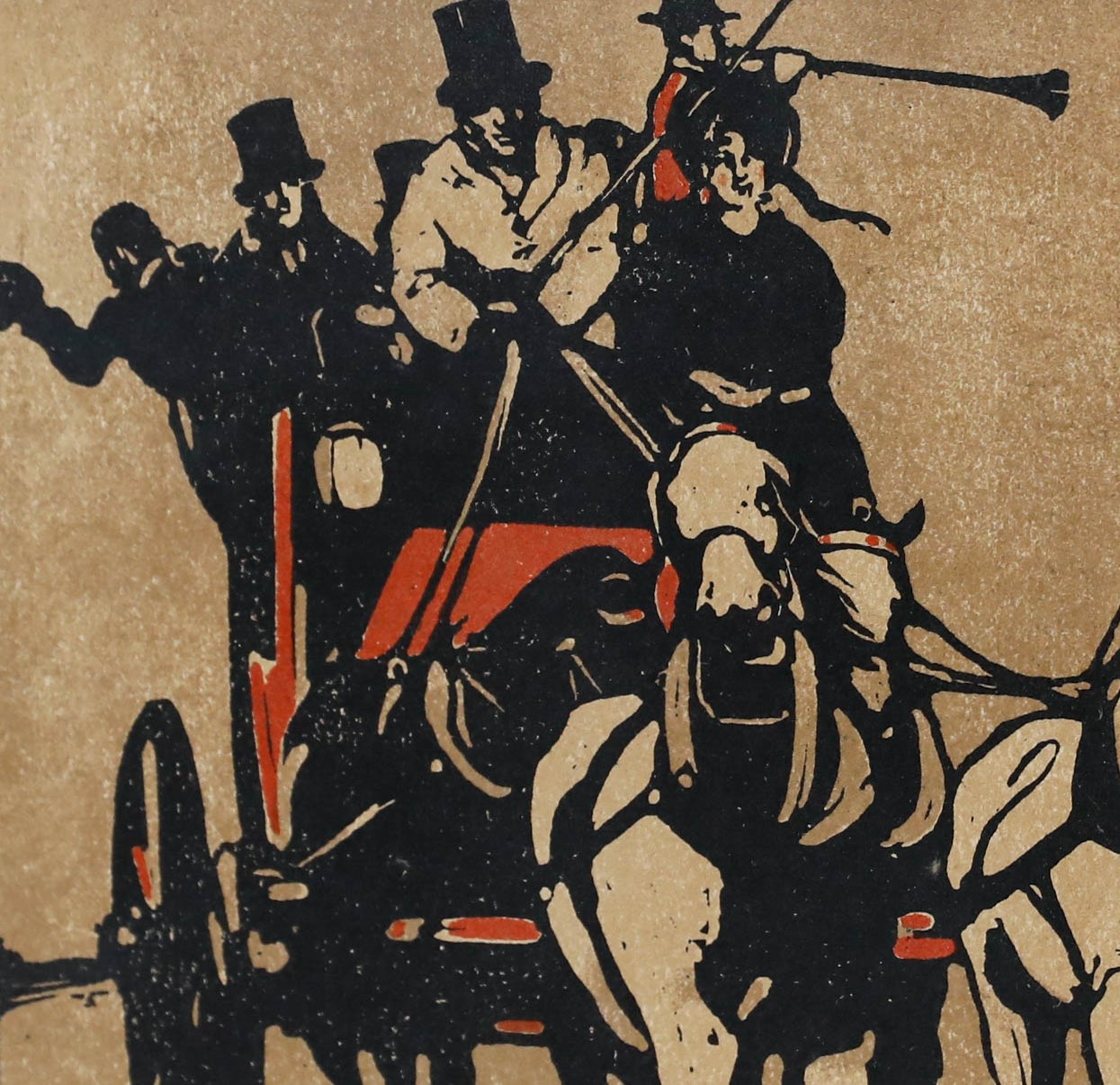
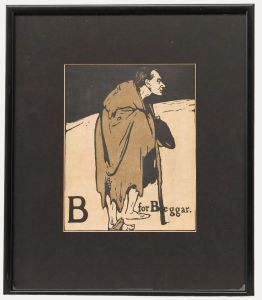
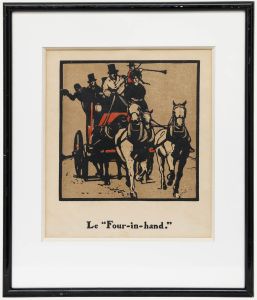
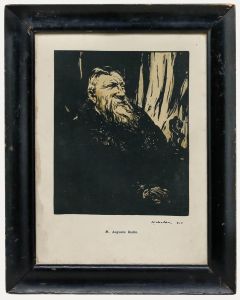
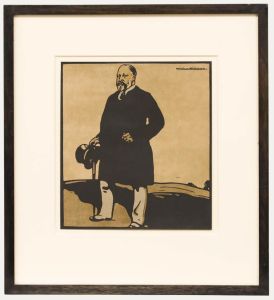
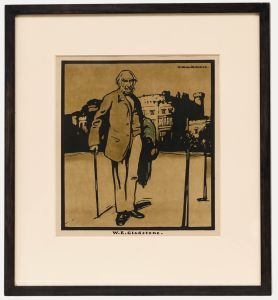
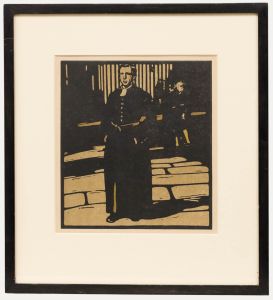
Nicholson and Pryde began working under the name J.&W. Beggarstaff, producing striking, innovative posters marked by bold outlines and flat colours. These included designs for a production of Don Quixote, Harper's Magazine and Rowntree's Elect Cocoa. In the following years, Nicholson developed a successful solo career, particularly in woodcut printmaking. Notable publications include An Alphabet and An Almanac of Twelve Sports with verses by Rudyard Kipling, London Types with verses by W.E. Henley, and The Square Book of Animals. Nicholson also made a series of portrait woodcuts, the first of which was a jubilee portrait of Queen Victoria, which brought him great success. These were collected in the two series of Twelve Portraits, the first of which was awarded a gold medal at the 1900 Exposition Universelle in Paris. Nicholson then turned his attention to portrait painting.
Among his finest portraits are those of Max Beerbohm and Gertrude Jekyll, which are both in the National Portrait Gallery. His portrait of George Saintsbury is at Merton College, Oxford. Nicholson was also a keen landscape and still-life painter.