The store will not work correctly when cookies are disabled.
We use cookies to make your experience better.To comply with the new e-Privacy directive, we need to ask for your consent to set the cookies. Learn more about our cookies policy.
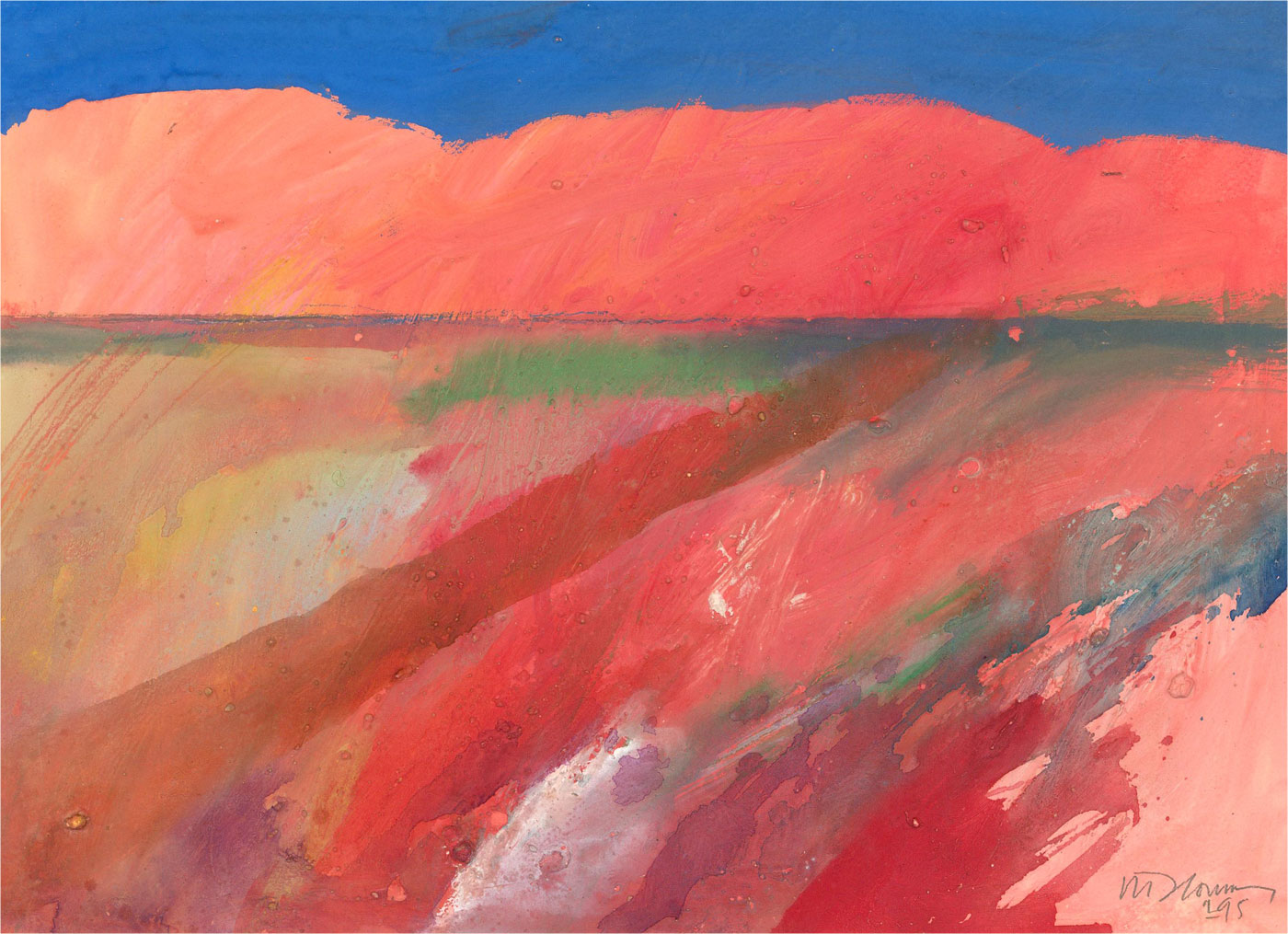
Richard J S Young’s artistic process indicates an artist who reflects the currents and motions of the outside world. His influences are diverse, extending to music, the figure, the sea and the desert.
Born in the leafy suburbs of Woking, Surrey, a year later, Young’s family moved to Australia where they settled near Adelaide, and then to Woomera in South Australia’s far north desert region, the outback. Right from kindergarten, Young was a compulsive drawer and painter on pretty much any surface he could find. Woomera’s arid and dry desert landscape provided an enduring inspiration where bright colours contrasted beautifully with the vast and expansive blue sky.
At the age of 14, Young returned to England. At school, he discovered Cubism, then Cézanne and Matisse whose view of the world was colourful and distorted, the academic facility of drawing was not needed. This is where Young’s exciting journey into colour adventures and abstraction began. However, the real change was the exciting discovery of the New York expressionists, in particular the works of Rothko, de Kooning and Pollock together and in parallel with Warhol. These influences have stayed with him throughout his life and career.
Academically, Young is a scientist and obtained a PhD in Chemical Physics at the University of Kent in Canterbury and later spent time at UCL’s The Slade School of Art. He has spent his life with scientific and artistic pursuits running in parallel. Young has stated that he had “chosen to join his interests in art and science...I was inspired as a teenager by Leonardo Di Vinci who as a Renaissance man joined art and the sciences and pioneered many of the techniques of art and technology”. He designed pigments for ceramic glazes and also inks for screen printed electronic applications. His artistic process indicates an artist who reflects the currents and motions of the outside world; his tendency to experiment is very evident.
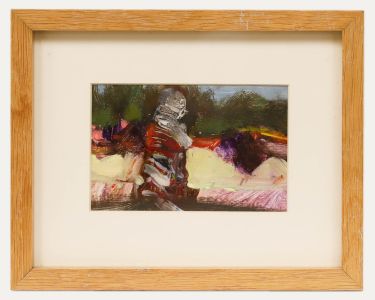
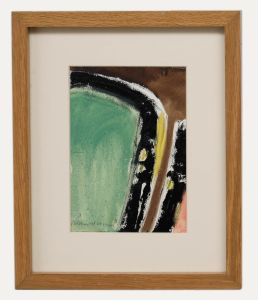
Young has had a number of one-man exhibitions, won Fine Art prizes at University, exhibited at The Royal Academy of Arts (Picadilly), The West of England Academy (Bristol) and Victoria Gallery (Bath) and elsewhere. Works are in private collections around the world. Much of these influences can be seen in the works available to you in the Sulis Fine Art collection.