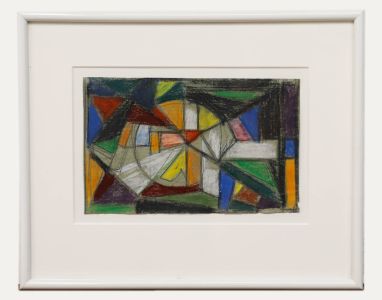
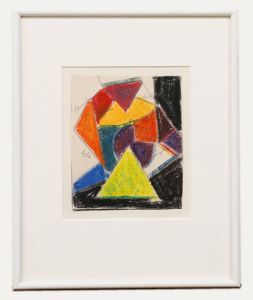
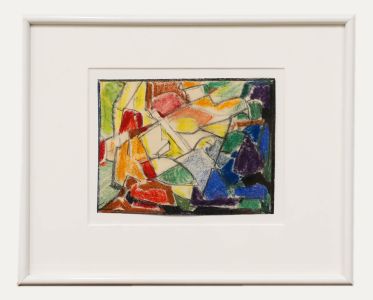
August Ludwig Schmitt was a German painter and graphic artist born in 1882 in Daxlanden, Germany. He had a childhood deeply influenced by nature, which became a recurring theme in his later art. Schmitt's artistic journey spanned several styles, most notably Impressionism and Modernism, and he worked in various mediums, particularly oil painting, though he also created works in pastels, watercolours, lithographs, and mosaics. He began his formal art education after the death of his father, studying in Karlsruhe under Friedrich Fehr and later with Adolf Hölzel in Stuttgart. Schmitt's studies took him across Europe, where he was influenced by the works of great artists like Delacroix, Manet, Velázquez, Goya, and Cézanne.
His time in Paris and later trips to Spain and Morocco shaped his understanding of colour and composition, leading him to develop a unique style blending natural forms with abstraction. Schmitt's artistic career also took him to the battlefield during World War I, where he served as a war artist. After the war, he married and created serene landscapes in oil and watercolour. He became a prominent teacher, co-founding the Free College of Art in Stuttgart, where he mentored many students. In 1930, he helped form the Jury-free Artists Association in Stuttgart, but political pressures from the Nazi regime led to the dissolution of both the association and the college.
Schmitt's work continued to evolve, with his later paintings reflecting vibrant colours and increasingly abstract forms. He passed away unexpectedly in 1936 following surgery, with his work continuing to be exhibited posthumously in Germany and the Netherlands.