Arthur Paunzen was a Jewish Austrian etcher, engraver and illustrator. He studied with Ludwig Koch in Vienna and in France, at the Académie Julian, under Jean-Pierre Laurens. Later, he travelled throughout Italy, studying art and architecture. In 1918, shortly after he began exhibiting, he married Cornelia Westreich (1894-1971), who was also Jewish, in Vienna. His interests extended to literature, including a series of etchings depicting Raskolnikov, from Dostoevsky's Crime and Punishment.
In 1938, when Hitler annexed Austria, he and his wife moved to Great Britain. In May 1940, the British authorities interned all German and Austrian citizens in the country. He was among them and died on 9 August 1940, in the Central Internment Camp, Douglas, Isle of Man.
His friend and fellow internee, the composer Hans Gal, kept a detailed diary. In it, he describes Paunzen's cause of death as severe bronchial pneumonia, made worse by neglect on the part of the camp's medical workers. He is buried in the Jewish section of the Douglas Borough Cemetery.
Many of his pieces were collected by the British Museum, the Stockholm Engraving Collection at the National Museum, and the Albertina Museum in Vienna.
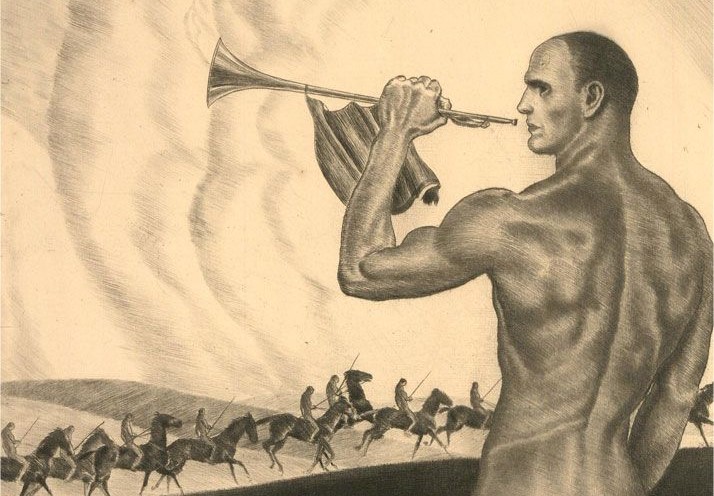
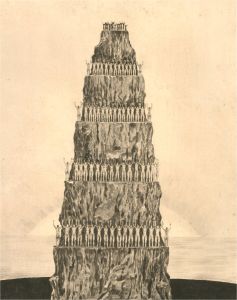
This wonderful collection of exquisite etchings by Austrian artist Arthur Paunzen is inspired by Beethoven's symphonies. Paunzen’s interest in Beethoven reflects his own personal style, which often dwells on the human condition. This small collection is typical of Paunzen's work and is centred around symbolism, while also exploring more traditional themes such as nudes, portraits, and architecture. The collection was purchased with the original folder displayed in the images, please note this is not included with each etching.